“Flock Cameras” Spread Across Connecticut for Years. Now the State Is Trying to Govern Them
A new statewide survey reports more than 1,500 fixed ALPR cameras tracking when and where people drive. New limits on police use and data sharing take effect October 1, but questions remain about how those safeguards will work in practice and whether they are enough to earn the public's trust.
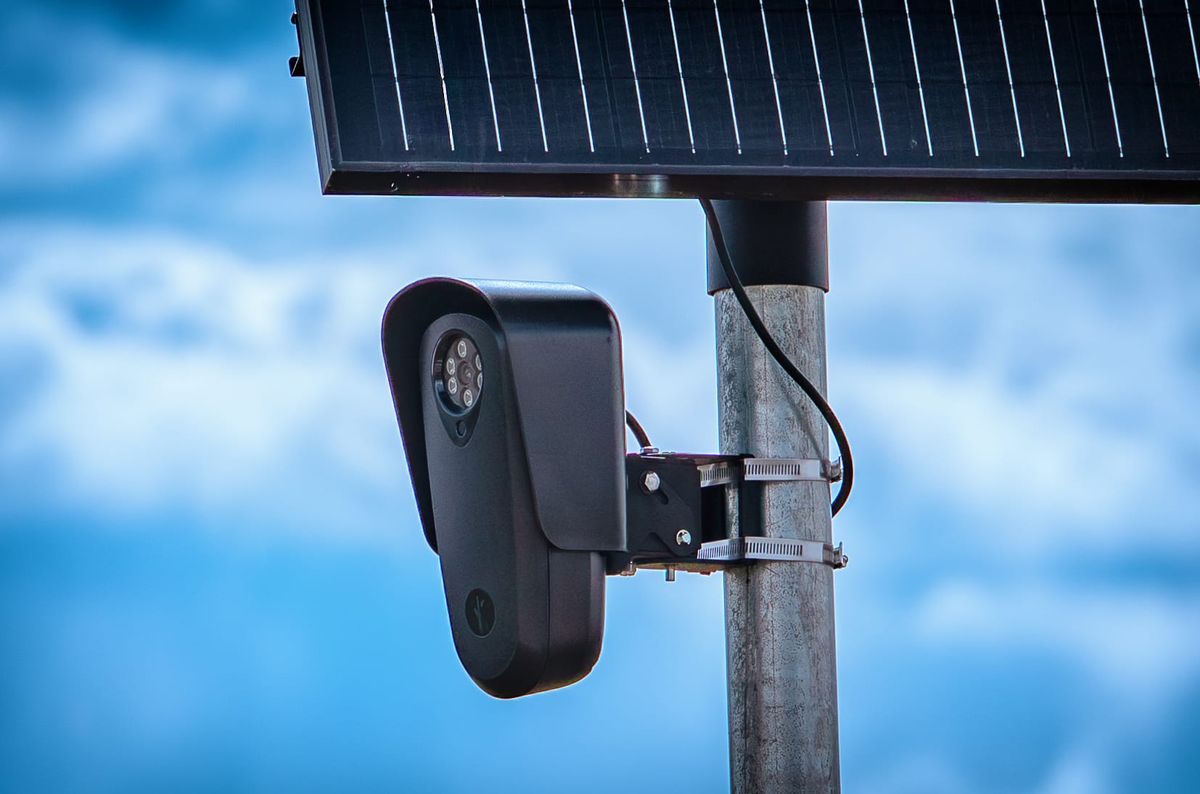
That is how Flock Safety, the largest vendor of Automated License Plate Readers (ALPRs) in the United States, pitches its product. Their customers, primarily local police departments across the country, have spent millions of dollars in public funds to plug their towns into that connection. While they may have focused on local use, volunteer open-source projects have documented more than 140,000 mapped ALPR locations across the country, including Connecticut, many of which share their sensitive data across state lines.
But what makes Automated License Plate Readers different from the typical security cameras that have existed for decades?
(An important distinction about ALPR cameras, often muddled in recent controversy and debate, is that they are not traffic enforcement cameras that can cite you for speeding in a school zone or running a red light. Those are operated and regulated separately under Connecticut’s ATESD program, but they have faced their own controversies.)
Automated License Plate Readers do exactly what the name suggests: by photographing a vehicle’s license plate, an ALPR camera automatically identifies and logs every car that drives by it, 24 hours a day, 7 days a week. While they primarily identify a car by its license plate, they can capture even more information. Using sophisticated software, some of which is powered by artificial intelligence, an ALPR system can also identify a vehicle's make, model, and color to create a unique “vehicle fingerprint” for each car, even registering details like bumper stickers, vehicle condition, and images of the vehicle’s drivers and passengers.
All in the blink of an eye.
From a camera to a network
One reason ALPRs have proliferated so quickly is that they're not that new; vehicle-mounted readers have existed for years before the more controversial “fixed” readers started appearing on streetlights and telephone poles. But two things changed over the last few years that have created an entirely new context around their use.
First, as with most technology, the readers themselves have become cheaper. A decade ago, conventional ALPR systems commonly cost around $20,000 or more per unit; newer systems can typically be deployed for a few thousand dollars per camera per year. As a result, it has become easier for towns to find space for them in their annual budgets and deploy them on their streets.
Second, access to the camera networks became not just a bonus - shared ALPR databases have also been in use by some law enforcement agencies for over a decade - but a core feature itself. In August of 2020, Flock began offering customers access to its nationwide network at no additional cost, allowing participating agencies to search vehicle sightings collected by other Flock customers across the country as part of the package.
That changed what installing an ALPR meant. A town was no longer just buying a camera that could identify vehicles passing through one intersection or allow an officer to check whether a car stopped at a red light had expired tags. It could also give police access to vehicle sightings shared by other participating agencies, connecting local cameras to a nationwide search network.
These cameras - commonly known as “Flock cameras” but designed and produced by several different companies - can turn a single license plate into a map of someone’s recent movements, showing exactly where and when that vehicle passed any participating camera over the previous days or weeks. With enough cameras and enough sightings, those individual data points can be stitched together into a detailed picture of someone’s routine: where they go, who they visit, and when.
Not long ago, that kind of instant, sweeping surveillance was a trope of dystopian science fiction, but now thousands of ALPR cameras make it possible to track someone’s driving patterns across state lines, going back days or even weeks. Much like a Google search indexes the entire internet to find exactly what website you’re looking for, ALPR-powered databases can let their users see when and where a vehicle has been with just a few keystrokes.
Counting Connecticut’s cameras
The exact number of ALPRs in Connecticut (and the country) has historically been hard to determine, but public records requests have helped document ALPR use in recent years. In March, the ACLU of Connecticut testified that its Freedom of Information Act requests had identified 53 police departments operating ALPR systems in the state.
However, last week, in anticipation of upcoming regulations, Connecticut’s Police Officer Standards and Training Council (POSTC) released an updated model policy outlining new ALPR standards for departments, as well as further recommendations on how surveillance technologies, especially ALPRs and the data they collect, should be used by the state’s law enforcement agencies.
However, in what appears to be the first time such data has been made publicly available, the recommendations also included a summary of a statewide survey assessing how many departments use ALPRs and similar surveillance technology, including drones.
Without the complete survey data, including which agencies were or were not surveyed, it is still unclear whether the survey can be understood as a fully comprehensive accounting of every publicly operated license plate reader in Connecticut. However, the summary reported 1,564 fixed ALPR cameras across Connecticut. POSTC’s survey included 105 agencies, though only 97 answered whether they operated fixed ALPRs. Of the 97 agencies answering whether they used fixed readers, 71 said yes: nearly three in four.
One single agency in Connecticut operates over 300 cameras.
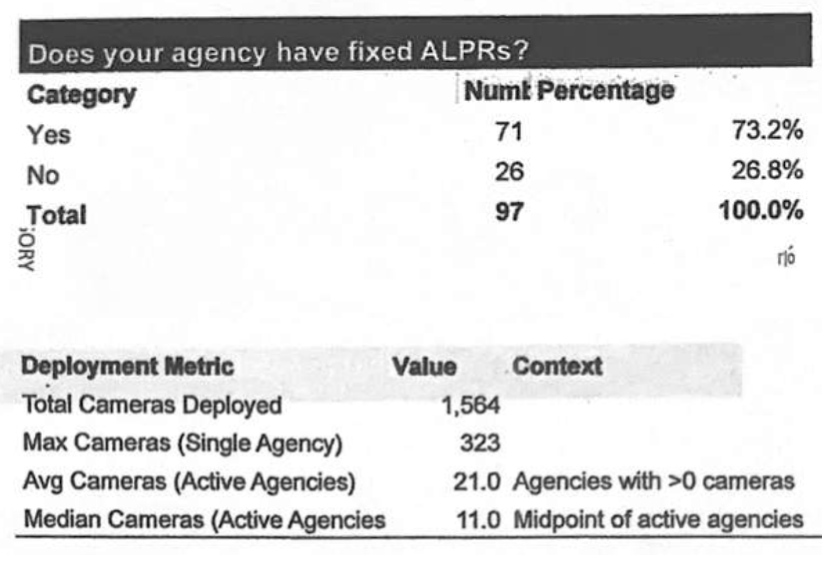
POSTC’s survey total substantially exceeds the roughly 1,000 ALPR locations documented by sites like Finding Flock, DeFlock, and HaveIBeenFlocked in Connecticut, which use open-source and volunteer-generated data to estimate ALPR populations nationwide.
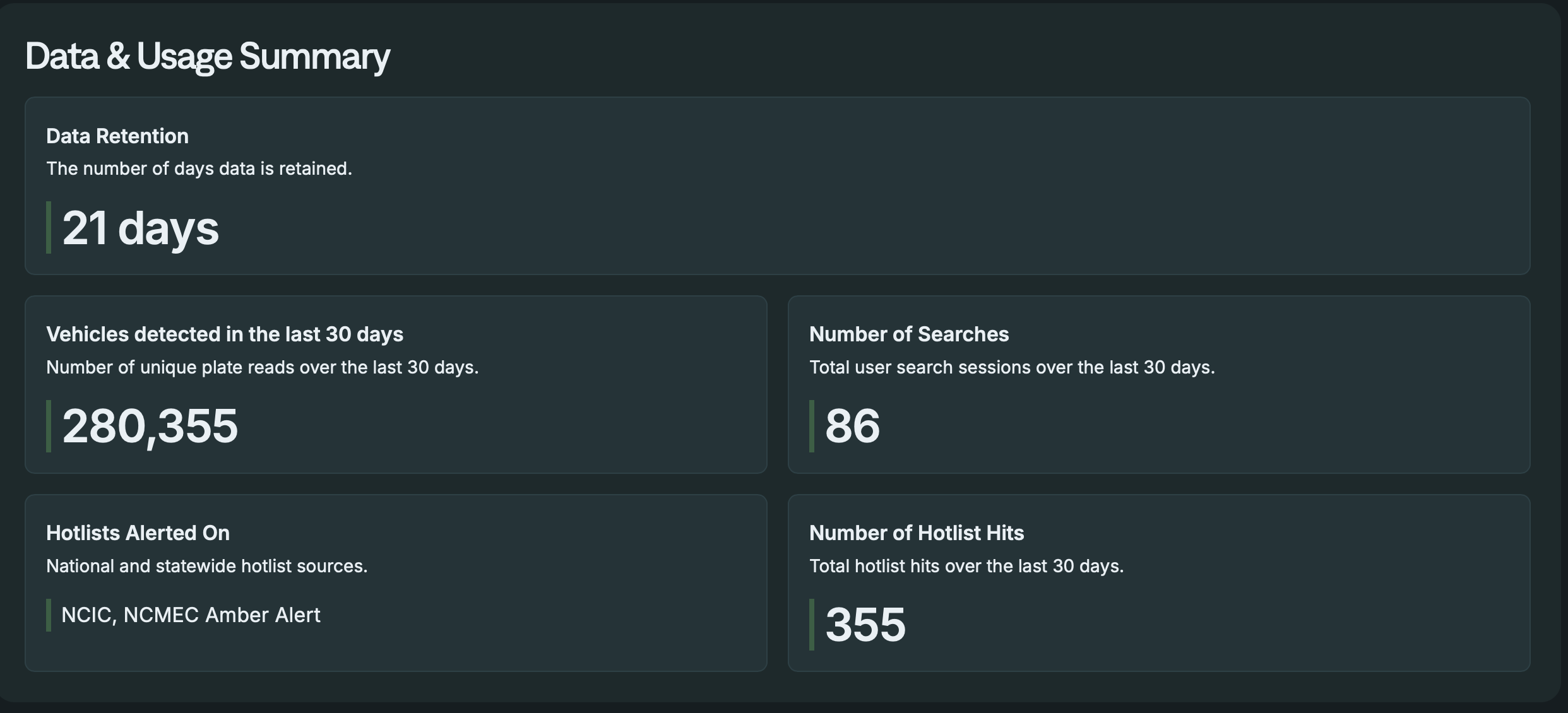
But with millions of registered vehicles in Connecticut alone, these cameras' databases can fill up quickly, even in a relatively small town’s network. At the time of this article’s publication, Wilton, CT’s public Flock transparency portal reported approximately 280,000 different license plates recorded by Wilton's 11 ALPR cameras over the last 30 days. A concerned citizen might have questions about all that data even if it never left their town.
Local cameras, national controversy
Flock’s sales pitch, “Everything connected,” was not much of an exaggeration. For years, participating departments could easily opt in to share their local camera data with a national network and, in return, search data recorded by the thousands of cameras outside their borders. However, the safeguards governing that connection were far less standardized, and oversight largely fell to each individual department. As the network expanded, reports of abuse brought that department-by-department oversight under intense scrutiny.
Last month, The Washington Post documented at least 50 cases where officers were convicted or accused of misusing their ALPR access. A police officer in Texas was just sentenced to five years in prison for using his department’s Flock system and other official databases to stalk his ex-girlfriend and her social circle.
The Electronic Frontier Foundation obtained records showing that a search described by Flock and a sheriff as a missing-person case was in reality part of an investigation into a woman’s self-managed abortion. The EFF’s analysis of ALPR logs also showed searches connected to No Kings Day protestors and queries listing ethnic labels or slurs for Romani people as their stated justification. However, even when used more methodically as an investigative tool, their use has contributed to serious mistakes.
During the investigation of an October 2025 fatal hit-and-run crash in Florida, a Flock search led investigators to Lindsey Isaacs’ black Dodge Durango. Investigators arrested her the following April, and she spent 13 days in jail before being released on bond. A subsequent Florida Highway Patrol review found no damage suggesting her SUV was involved in the hit-and-run. All charges against Isaacs were dropped and the owner of a maroon Dodge Durango was later arrested as part of the investigation. Isaacs' story is one of several cases of investigative errors involving ALPR data contributing to innocent people being stopped at gunpoint, arrested, or jailed.
Public pressure across the state
Incidents like those are one reason a growing backlash across the country is fueling grassroots movements that seek to regulate, and even dismantle (sometimes literally), the nationwide network of cameras perched on their neighborhood’s telephone poles.
As community members, journalists, and civil liberty advocates in Connecticut requested “network audits” - logs documenting every search involving a department’s cameras- of their town’s ALPR systems, they documented how often these local networks were being tapped by agencies from across the country, sometimes even to support investigations that Connecticut’s own law-enforcement personnel could be prohibited from assisting.
In February, an analysis submitted by Windsor, CT resident Eric Weiner reported 599,933 searches involving the town’s Flock camera data between April 1 and June 9, 2025. Those queries came from as far away as Texas and Florida, and several were explicitly tagged as part of immigration enforcement efforts. Since the passage of the Trust Act in 2013, Connecticut law enforcement agencies have been restricted from supporting federal immigration enforcement, with some exceptions. In July of this year, Windsor’s town council voted to end its contract with Flock and announced plans to remove all of its installed ALPR cameras by the fall.
In November 2025, the Connecticut ACLU called for a temporary moratorium on ALPR use statewide. In March 2026 testimony to lawmakers, the Connecticut Police Chiefs Association called ALPRs an “extremely valuable investigative tool,” while supporting statewide safeguards governing how their data could be accessed and shared. In August, Governor Ned Lamont, citing continued public opposition and only a few months after signing the state’s new ALPR legislation, called for municipalities to pause all new installations and for the Police Officer Standards and Training Council to accelerate their review of departmental guidelines accompanying the state’s upcoming regulations.
Connecticut sets new rules
In May of this year, the Connecticut legislature passed Public Act 26-14, which created the state’s first comprehensive regulations governing the public use of ALPR technology. Its primary restrictions and regulations go into effect October 1st.
Here are some of the most significant changes to how ALPR systems can be used (and not used) under the law:
- Police use of ALPR systems requires an authorized purpose including:
- Approved database checks
- Searching for vehicles connected to outstanding warrants
- Searching for missing or endangered people
- Locating stolen vehicles
- Searches for an active criminal investigation require reasonable suspicion of an offense, a recorded reason, and any associated case number.
- ALPR data specifically cannot be used for:
- immigration enforcement
- identifying someone engaged in First Amendment activity
- Investigating or prosecuting people over reproductive or gender-affirming health care that is lawful in Connecticut
- Monitoring or investigating people based on certain characteristics, including race, ethnicity, or citizenship
- Data retention is limited to 21 days (with some major exceptions)
- Routine out-of-state sharing without a warrant is restricted to police in New York, Massachusetts, Rhode Island, and qualifying joint task forces
- Those neighboring state agencies and task forces requesting data must promise in writing to follow Connecticut’s restrictions while using that requested data
- Other law-enforcement agencies, including federal agencies, generally need a judicial warrant for the specific data requested.
POSTC’s model policy, among other clarifications and expansions upon PA 26-14’s regulations, requires unique login credentials for all users, a documented reason for every single system query along with the related case or identifying number, preserved records of all system access, and monthly audits to check that searches served authorized purposes and included the required information. It also requires a designated system administrator, reporting directly to the chief of police, to oversee proper use of the department's network.
Departments have until January 1, 2027, to meet or exceed the model policy’s requirements.
Watching the watchmen watching the cameras
POSTC’s 58-page advisory report offers many recommendations beyond the statutory and model policy requirements, many of which anticipate heightened public expectations around oversight. One major theme is reframing policy away from the cameras themselves and toward regulating the data they collect and how it's used, regardless of what device collected it.
For now, audits of that data may be where a community’s trust is won or lost.
The report is clear in its recommendation: “[a]udit records must outlast the underlying data”, ideally for at least 12 months. Concerns about misuse may arise after the 21 days during which specific vehicle data (e.g., license plates) must typically be deleted, making preservation of the logs documenting how that data was used essential for later review.
One element auditors will likely evaluate closely is a query’s justification: why is an officer looking at your driving activity?
One flaw that enabled the abuse of ALPR camera networks in the past was that searches could be completed without supplying a meaningful justification; a blank box in the search form could be filled with responses like “idk” (I don’t know), “lol”, “lmao”, “sexy”, and gibberish, or just left blank. Entries like that, even if part of legitimate investigation efforts, leave reviewers little meaningful information about why a search occurred.
Following those controversies, Flock Safety says it has introduced a required menu of offense types for ALPR searches.
To deter misuse and that kind of vague reporting, POSTC’s model policy requires every query into an ALPR database to be connected to a specific identifier, like a case number. The advisory report goes further, recommending that those identifiers be directly compared against police records where the platform supports it.
Will the rules be enough?
After October 1st, many of the questions and debate around ALPR networks will come down to trust.
Will departments have the staff and systems to verify that searches, including those from other states, are justified? How will the public know whether the required audits are working? Will departments publish those records, or will residents have to request them?
And perhaps more crucially, has the rapid deployment of these networks before statewide regulation already created too much distrust in the public?
In fact, some legislators who helped pass the new regulations appear to have similar concerns. Josh Elliott, a Democrat who represents CT’s 88th district and co-sponsored the legislation leading to PA 26-14, co-wrote an op-ed on September 23rd that was deeply skeptical of ALPR networks and, in addition to recommending several further regulations for lawmakers to enact, the op-ed bluntly concluded: “One thing is clear, the risk of misuse of mass surveillance far outweighs the justification for its use.”
Generally speaking, law enforcement leadership, particularly the Connecticut Police Chiefs Association’s Legislative Committee, believes they can keep up with the technology through adequate regulation and oversight. In a July op-ed defending the use of ALPRs written on the Association’s behalf, it said that when it comes to public safety and privacy, citizens “do not have to choose between the two.”
While it is not clear how many in Hartford share Elliott’s skepticism or the CPCA Legislative Committee’s confidence, legislators continue to engage their constituents about ALPRs and their regulation. Democratic State Representatives Cristin McCarthy Vahey, Sarah Keitt, and Jennifer Leeper organized a September 16th webinar titled “Cameras in our Community” to address the questions and concerns they have been fielding from their constituents in recent days.
The webinar’s panel of experts represented a wide range of views surrounding the debate, but Representative Leeper acknowledged the inherent challenge of trying to safeguard systems that quickly evolve in capability: "How can we keep up with a technology we can hardly imagine what it will be in six months, a year, five years?”
The new law and standards restrict and regulate many aspects of ALPR networks and narrow their authorized use. But even within the new regulations, questions remain about how much and what kind of sensitive data these networks still collect, how secure that data is, and how the established guardrails will be applied, enforced, and overseen.
Another question looms over this complex debate about operating these networks safely.
Do communities want these surveillance networks at all?
What's next:
In future articles, Reasonable Inquiry will examine how these new rules work in practice: how individual departments configure and audit their systems, how vendor systems differ and what new capabilities they plan to offer, how these networks were first approved and expanded locally, and whether communities want stronger regulation or fewer cameras altogether.
Have a tip?
Reasonable Inquiry is seeking public ALPR audit logs, access records, and data-sharing records from Connecticut police departments from the weeks before and after October 1 to better understand how these systems are used in practice, particularly when data is accessed or shared outside the original department. If you have information about surveillance technology and systems in Connecticut and the policy debates around them, especially public records documenting the deployment, operation, and debate around those systems, please get in touch.